By Elif Cetinkaya (TCS ’25, Biochemistry, Pre-Med) and Levi Forney (TCS ’26, Business Administration, Pre-Law)
Undergraduate college research can often be seen as an experience reserved for juniors, seniors, or even graduate students. At Clarkson University, however, students in The Clarkson School (TCS), a unique early college program, have the opportunity to be immersed in high-impact academic experiences right from the start. As two TCS students working alongside Professor Costel Darie in the Darie Proteomics Research Lab, we want to share what it’s like to contribute to real scientific projects as young researchers. This blog offers a behind‑the‑scenes look at what we study, what we do, and how meaningful research can begin earlier than most students ever imagine.
Meet the TCS Student Researchers
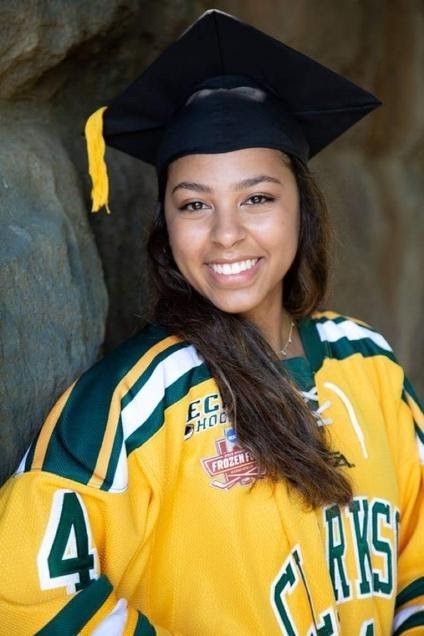
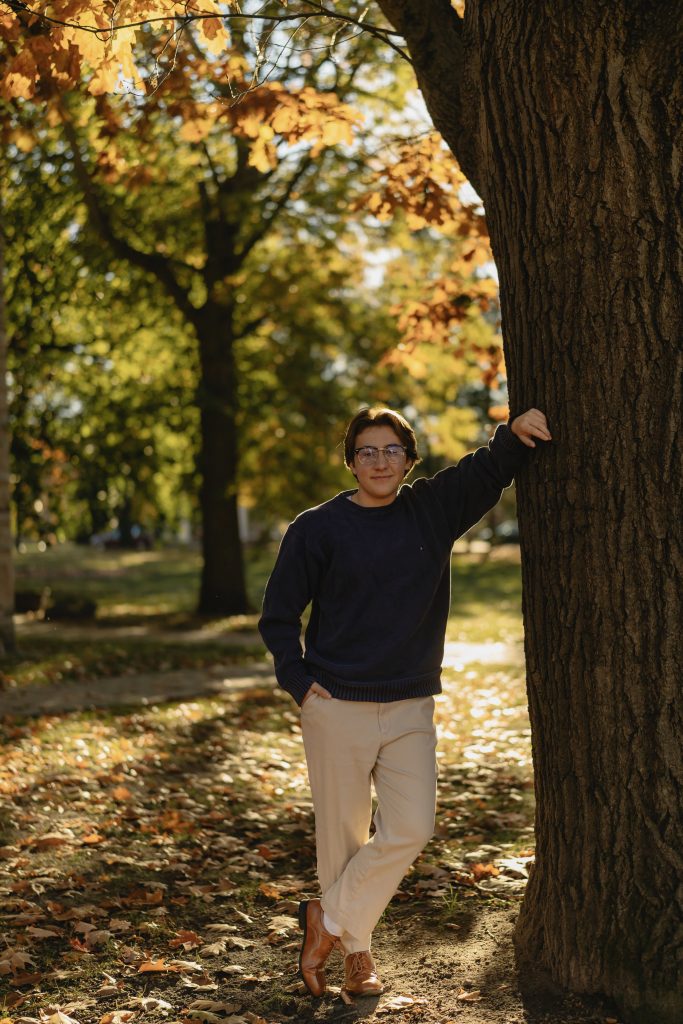
Elif Cetinkaya
Hi! My name is Elif. I am from Potsdam, NY, and I am a sophomore Biochemistry major on the Pre-Med track and graduate of The Clarkson School, Class of 2025. I serve as a TCS Peer Educator and Student Admissions Ambassador, and I conduct undergraduate research in the Darie Lab on neurodevelopmental disorders and early cancer detection. Growing up in a rural community impacted by healthcare shortages, I’ve come to see research not just as science, but as a way to improve diagnostics and expand early intervention options for underserved populations.
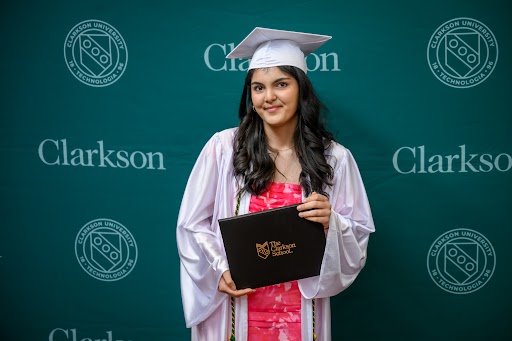
Levi Forney
Hi, my name is Levi Forney, TCS Class of 2026, and I am from Norwood, New York. I am majoring in Business Administration with a minor in Pre‑Law, and my course curriculum has allowed me to intersect with the sciences. Even as a non‑science major, I feel integrated into the research environment, contributing to projects that require analytical thinking, communication, and collaboration.
Our Research Topic
The Darie Lab focuses on proteomics, which is the study of proteins that drive nearly every biological process in our bodies. By analyzing protein patterns, we can investigate disease mechanisms, identify biomarkers, and support the development of early diagnostic tools. Our projects span autism and other neurodevelopmental conditions, PTSD and depression biomarkers, early breast cancer detection, and neurobiological pathways influenced by environmental and genetic stressors.
A Day in the Lab & What We Do
Our usual workflow involves a mix of hands-on techniques, preparing protein samples, conducting experiments, and analyzing results. Key methods we use include extracting proteins from biological samples, micropipetting protein concentrations, running gel electrophoresis (SDS-PAGE) to separate proteins by size, and preparing samples for mass spectrometry. All vital steps in biomarker discovery.
Working with this advanced equipment early in our academic careers has allowed us to gain hands‑on experience typically reserved for upperclassmen. What really makes research in the Darie Lab special is that no two days are the same. Some days, we troubleshoot why a gel didn’t run correctly. Other days, we analyze band patterns from SDS‑PAGE or help prepare samples. This environment encourages us to think critically, ask questions, and develop problem‑solving skills. And because research rarely goes perfectly the first time, we’ve learned patience along the way.
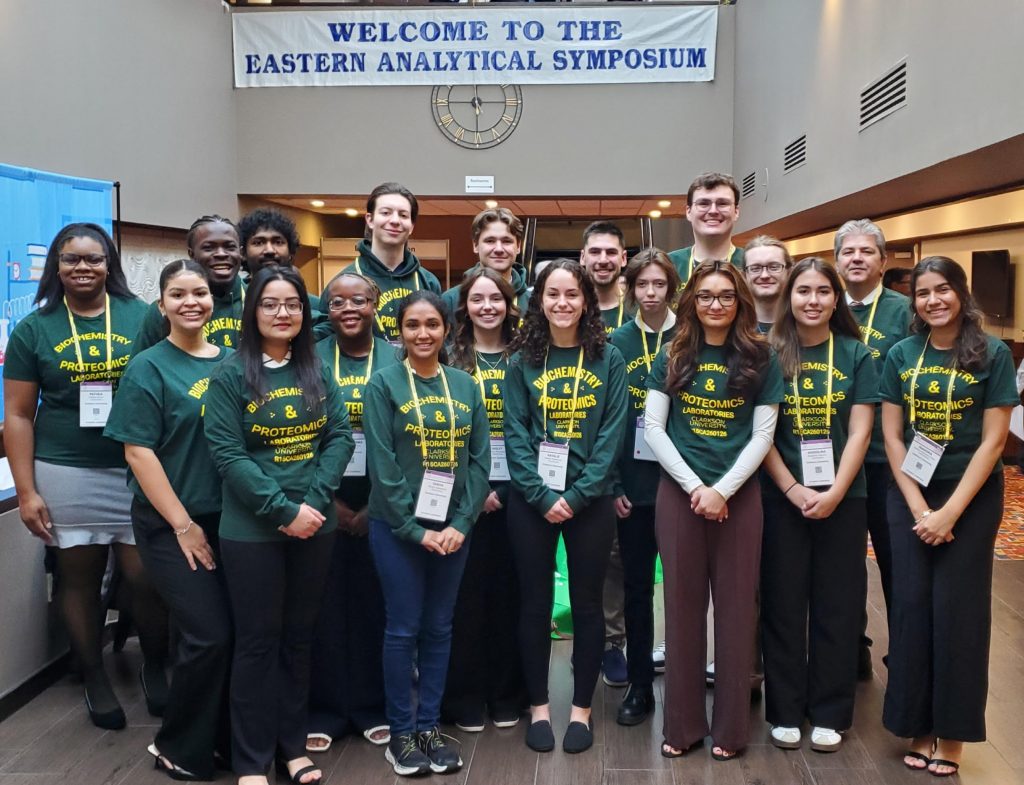
What We Learned:
Our work in the Darie Lab has given us far more than technical experience. It has boosted our academic development, professional confidence, and future goals. We’ve built a strong foundation in laboratory techniques, data interpretation, scientific writing, and experimental design, all of which strengthen our coursework and prepare us for careers in medicine, research, biotech, or healthcare policy. Beyond the science itself, we’ve learned how to manage long-term projects, collaborate with graduate students and faculty, and communicate scientific results successfully. These are transferable skills that will support us wherever we go.
The Clarkson School gives students an uncommon opportunity, which is to engage in meaningful, college-level academics while still in high school. From day one, we have had access to advanced laboratory tools and mentorship within the Darie Lab, where undergraduate students can work with graduate students and faculty, accelerating our learning and opening new academic pathways. Most importantly, we aren’t just observing. We are contributing to projects with real clinical and scientific significance, from mental health biomarkers to cancer detection. Knowing that our work supports research with potential real-world impact is incredibly amazing. This early exposure sets us apart and prepares us for future opportunities that many students don’t encounter until much later in college.
Both our experience as TCS students working in the Darie Lab demonstrates what is possible when young scholars are given real opportunities, real responsibility, and real mentors. Research has strengthened our academic passions, expanded our skill sets, and helped us understand how our fields connect to the world beyond campus. The Clarkson School is more than an early college program; it is a launchpad for driven students who want to challenge themselves. If our story proves anything, it’s that at The Clarkson School, the opportunities to learn, grow, and explore are limitless.