For Clarkson University chemical engineering student Grayson Wallace ’28, a summer internship with a global engineering and consulting firm offered an opportunity to apply classroom knowledge to real-world environmental challenges.
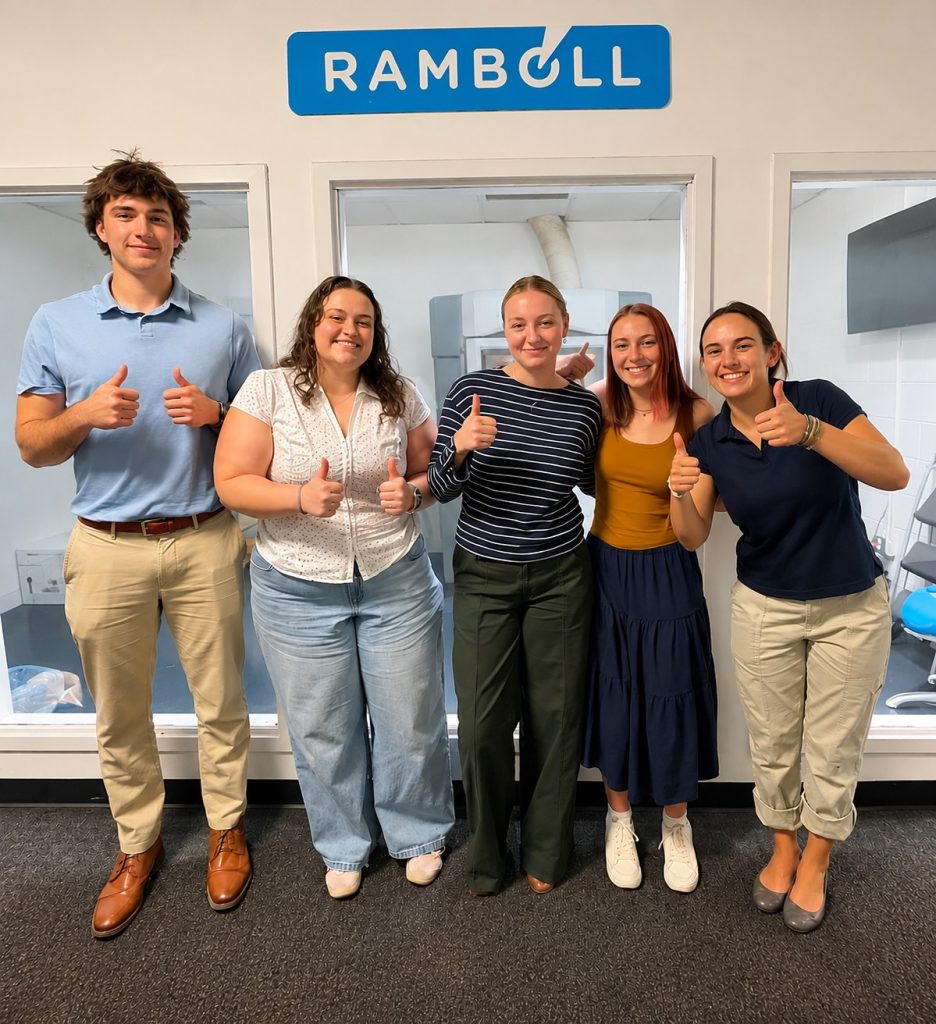
As an industrial wastewater engineering intern for Ramboll, Wallace spent this summer working out of the company’s Syracuse, New York office, contributing to projects involving infrastructure improvements and environmental sustainability.
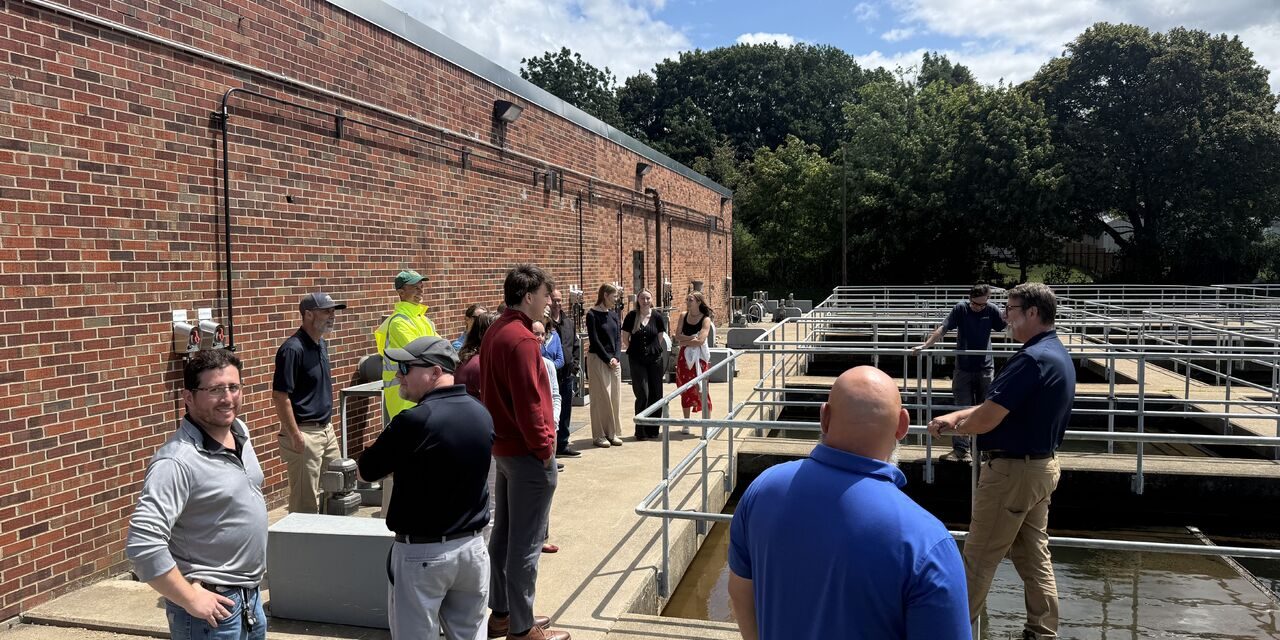
One of those projects was the Massaponax Wastewater Treatment Plant Expansion in Spotsylvania County, Virginia, a major infrastructure initiative designed to increase the facility’s treatment capacity and accommodate future growth. Wallace analyzed project data, prepared technical documentation and contributed to engineering deliverables for the facility’s expansion.
Wallace says the experience offered him a new perspective on the complexity of large-scale engineering projects and the considerations involved in developing critical infrastructure solutions.
“What stood out to me was seeing how all the different pieces of a project come together,” he says. “It gave me a better understanding of how much planning and collaboration goes into making something like this happen.”
Beyond technical work, Wallace discovered that solving engineering problems in a professional setting requires a different approach than tackling assignments in the classroom.
“In school, you are usually given all of the information you need to come up with a clear answer,” he says. “In a professional setting, you have to determine what information is important, make reasonable assumptions and think about how your decisions affect the entire project.”
From Classroom Concepts to Engineering Practice
Wallace credits Clarkson’s chemical engineering curriculum with helping him navigate the technical demands of his internship.
In particular, he says his experience using MATLAB, which is an engineering software program used for numerical analysis and modeling, and Microsoft Excel prepared him to analyze project data and solve technical challenges.
“Even when I was unfamiliar with a concept, the problem-solving skills I learned at Clarkson helped me work through it,” Wallace says.
Collaborating with experienced engineers also introduced Wallace to the teamwork and decision-making processes that shape professional engineering projects.
Under the guidance of his manager and Ramboll’s Industrial Wastewater team, Wallace observed how engineers communicate with clients, evaluate technical information and coordinate across disciplines to develop practical solutions.
“There’s more to engineering than doing calculations,” he says. “Communication, attention to detail and the ability to explain your decisions are just as important.”
Beyond those lessons, the Clarkson junior says the internship broadened his understanding of career paths available to chemical engineering graduates while reinforcing his interest in work that makes a tangible impact.
“I want to solve meaningful problems,” Wallace says. “My internship at Ramboll gave me a much better understanding of what working as an engineer is actually like, and showed me the various directions a chemical engineering degree can take me. I am excited to continue exploring those opportunities after Clarkson.”
Many Clarkson University students spent last summer taking their knowledge and skills beyond the classroom, gaining hands-on experience through internships across a wide range of industries and workplaces throughout the country.
Clarkson’s Beyond the North blog series highlights their experiences, the work they accomplished and the lessons they learned along the way.