Starting With the Numbers
In spring 2024, Clarkson’s Timber Bridge Team submitted a cost estimate for the Stone Valley Bridge project: $2,003.62. The document broke down every line item—90 pieces of 2″x6″x8′ decking, 22 stringers, eight diaphragms, 17 bags of concrete, anchorage hardware, chicken wire, and transportation costs. It read like something prepared by a consulting firm, but it came from undergraduates. For the students, producing an estimate like this was as important as pouring the concrete footings. It demonstrated their ability to plan, budget, and manage a project that would serve the community.
As Trey Naselli, a chemical engineering student on the team, put it: “As a chemical engineering, it doesn’t seem like Timber Bridge is really related to what I do, and quite frankly, it isn’t… The civil engineers come up with the plans… and then my role… is to… assemble, cut wood, use power tools, skills that I’ve developed all my life…Timber Bridge is a community service-based SPEED team. We don’t compete… we do projects across the community, where they’re needed.”
Civil and Environmental Engineering at Clarkson
Clarkson University’s Department of Civil and Environmental Engineering provides the framework for this kind of experience. U.S. News & World Report ranks Clarkson’s Environmental Engineering program among the top 60 nationwide, with Civil, Chemical, and Materials Engineering all in the top 100. The department is housed in the Wallace H. Coulter School of Engineering and Applied Sciences, which emphasizes small classes, a faculty of full-time researchers and teachers, and a culture of hands-on learning. Undergraduate research and design experiences are not the exception but the expectation.
A central pillar of that philosophy is the SPEED program (Student Projects for Engineering Experience and Design). SPEED teams are entirely student-run—usually 15–20 members—and while many compete nationally, the Timber Bridge Team is distinctive for its service mission. Its members, about 40 percent of whom are women, design and construct trail bridges in collaboration with local partners rather than other universities.
“The mission of the Clarkson Timber Bridge Team perfectly aligns with the passion that many Clarkson students have in applying the knowledge and skills that they are obtaining in their academic degree programs in bettering the human condition,” says Dr. Steve Wojtkiewicz, chair of Clarkson’s Department of Civil and Environmental Engineering.
That blend of purposeful work and practical learning is what keeps students involved. Roy Annis, treasurer of the Timber Bridge SPEED Team, says what draws him in is the mix of hands-on building and service. “I just like Timber Bridge because it’s a good break from coursework—you get to go out into nature and build something with your hands. And at the same time, it also helps people in the community,” he explains. His role includes tracking the budget, reporting purchases, and managing receipts—work that gives him both leadership experience and a sense of responsibility for the team’s success.
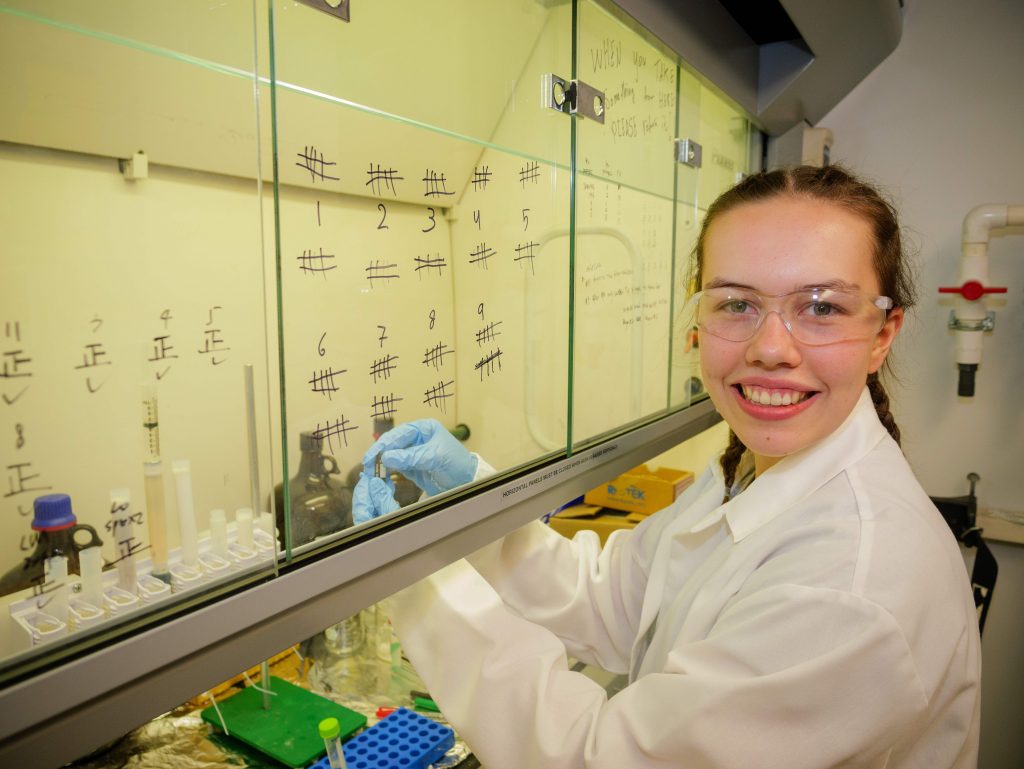
Abby Jeffers: Becoming a Civil Engineer
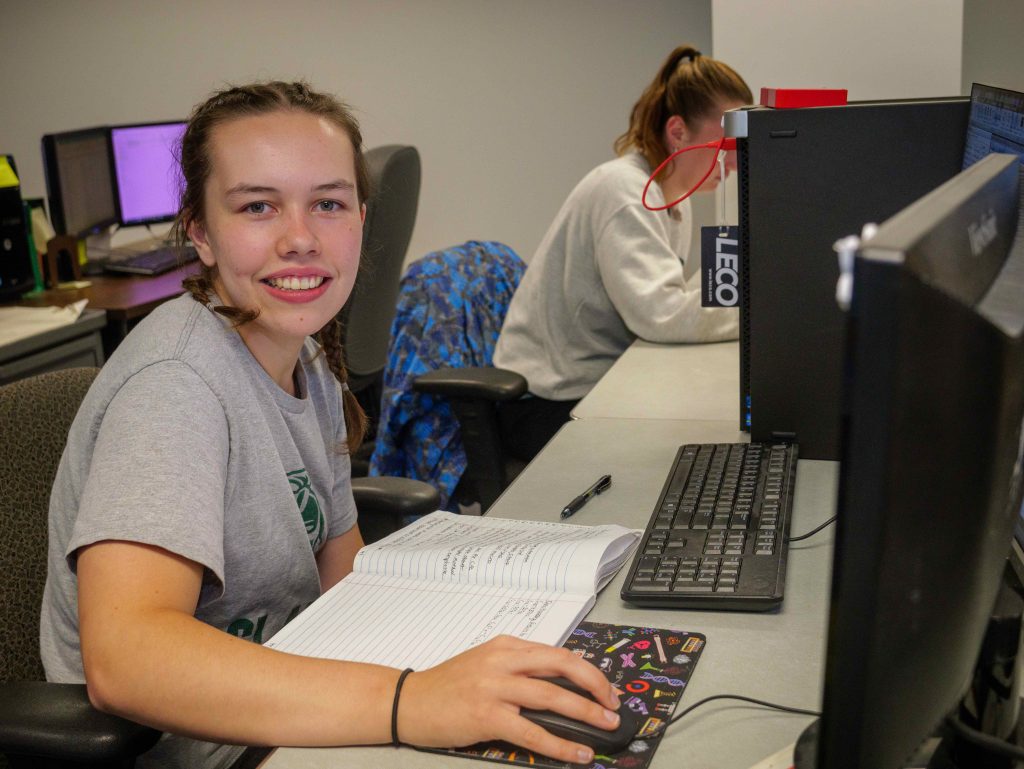
Abigail “Abby” Jeffers, from Clifton Park, New York, is a Civil Engineering major with a concentration in Water Resources and a minor in Environmental Engineering. And she is good with numbers. She maintains a 3.99 GPA and is also part of Clarkson’s Honors Program, though her strongest focus has been the Civil and Environmental Engineering department. Her résumé reflects a steady progression of professional experience. At Barton & Loguidice she worked as a water resources intern using Autodesk Civil 3D and ArcGIS Pro to produce design documents. At Clarkson’s Center for Air and Aquatic Resources, she helped develop new methods for identifying chlorinated paraffins in environmental samples. Earlier, with the New York State Department of Environmental Conservation, she evaluated wastewater treatment options and produced cost estimates. She holds OSHA-10 certification and has technical skills in ArcGIS Pro, Autodesk Civil 3D, Revit, MATLAB, and Microsoft Office.
Timber Bridge Projects
Jeffers now applies those skills as co-captain of the Timber Bridge Team. She and her teammates, including co-captain Remington Hafer, manage budgets, coordinate clients, and lead construction days in the field. The team has completed multiple projects in the region. On the Munter Trail, they collaborated with Clarkson Facilities to replace a section damaged by a fallen tree. At Stone Valley, they replaced a rotting bridge with a 75-foot timber structure anchored by concrete blocks. The current O’Malley Brook Bridge project involves replacing a span washed out by flooding; students are learning log cribbing and bank stabilization techniques from community partner Mark Simon.
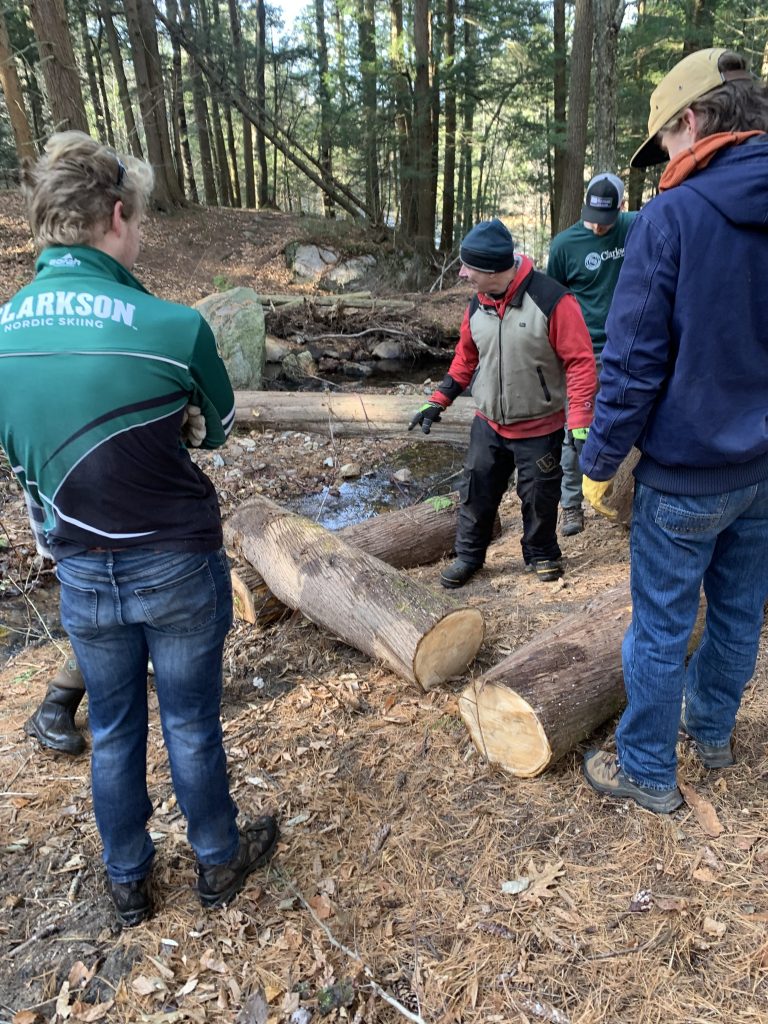
Abby describes her motivation simply: the projects mirror the consulting process. The team receives requests, conducts site analyses, produces CAD designs and estimates, and executes construction. The work gives students direct exposure to the flow of professional practice. It also requires leadership. As Jeffers explained, problem-solving in the field differs from problem-solving alone—others look to her for decisions, and she must keep projects moving while balancing diverse skill levels.
Jeffers devotes about five hours per week to leadership and service activities across Timber Bridge, the American Society of Civil Engineers, and Engineers for International Sustainability. Within Timber Bridge, she has found mentoring first- and second-year students especially rewarding. Learn more about mentorship and leadership in SPEED programs here on the blog. She emphasizes equitable delegation of tasks and ensuring everyone is engaged. The team size varies between 15 and 20 members, with about a dozen active on typical build days. For the North Country community, the bridges provide safe, durable crossings. For the students, they provide a proving ground in communication, budgeting, teamwork, and technical application.
Beyond the Bridges
Jeffers has already begun planning her professional trajectory. She is exploring co-op opportunities, including one in Alaska, and weighing the logistics of relocation and transportation. In discussions with faculty, she was encouraged to view opportunities like these not in terms of breaking even but as investments in her future. Her record suggests she is well-prepared: internships, certifications, leadership roles, and real-world construction experience mark her as the kind of graduate employers seek.
Conclusion
The $2,003.62 Stone Valley estimate is more than a piece of paperwork—it is evidence of how Clarkson undergraduates are trained to think and act like engineers. Abby Jeffers and her teammates translate classroom learning into community infrastructure, demonstrating the strength of Clarkson’s Civil and Environmental Engineering program. The bridges they build serve hikers and bikers, but they also stand as structures of another kind: foundations for professional readiness, leadership, and lifelong service.
“On Stone Valley, people walking the trail stopped to help—some even carried decking to the far end while we installed boards. It was the first time I really felt our work was reaching the public, and they were appreciating it.” recalls Timothy Read, Timber Bridge social media manager.
“The Department of Civil and Environmental Engineering focuses on providing students hands-on experiences that help transform our understanding of and interaction with both the natural and built environments to ultimately equip them with the knowledge necessary to overcome the complex challenges facing our global society.”
– Dr. Steve Wojtkiewicz, chair of Clarkson’s Department of Civil and Environmental Engineering.